
Classic Beef Stew Recipe
Classic Beef Stew Recipe: Ultimate Comfort Food Made Easy
When you crave a meal that feels like a warm hug on a chilly day, nothing hits the spot quite like a classic beef stew. Imagine tender chunks of beef, slowly simmered until they melt in your mouth, surrounded by hearty potatoes, carrots, and rich, savory broth.

You’ll discover simple steps and secret tips that turn everyday ingredients into a timeless dish your family will love again and again. Ready to make your next meal unforgettable? Let’s dive into the classic beef stew recipe that will become your go-to comfort food.
Choosing The Meat
Choosing the right meat is key to a perfect classic beef stew. The meat must become tender and full of flavor after slow cooking. Picking the proper cut ensures the stew has a rich texture and deep taste. Tough cuts with connective tissue work best for long cooking times. These cuts break down and make the stew hearty and satisfying.
Best Cuts For Stew
Chuck roast is the top choice for beef stew. It has a good balance of meat and fat. Short ribs add excellent flavor and tenderness. Round cuts like bottom round or eye of round are lean but still work well. Avoid very lean cuts as they dry out during cooking. Cubes from these cuts cook evenly and stay juicy.
Importance Of Marbling And Collagen
Marbling means fat streaks inside the meat. This fat melts while cooking and adds richness. Collagen is connective tissue that turns into gelatin with heat. Gelatin gives the stew a silky, thick texture. Cuts rich in collagen, like chuck, become tender and moist. This slow melting process makes the stew taste homemade and comforting.
:max_bytes(150000):strip_icc()/RM-281995-ClassicHeartyBeefStew-ddmfs-3x4-6957-660344f4e4c8417fa6d1cf3175e0202c.jpg)
Credit: www.allrecipes.com
Preparing The Meat
Preparing the meat is a crucial step for a classic beef stew recipe. Properly handling the meat builds the stew’s rich flavor and tender texture. It starts with simple but important tasks that affect the final taste.
Follow each step carefully to ensure the meat cooks evenly and absorbs all the wonderful flavors.
Patting Dry And Seasoning
Start by patting the beef pieces dry with paper towels. Removing moisture helps the meat brown properly. Wet meat will steam instead of sear, losing flavor and color.
Next, season the beef generously with salt and pepper. This enhances the natural taste of the meat. You can also add other spices like garlic powder or paprika for extra aroma.
Searing For Flavorful Crust
Heat a heavy-bottomed pot or Dutch oven over medium-high heat. Add a small amount of oil with a high smoke point, such as vegetable or canola oil.
Place the beef pieces in the hot oil without moving them. Let them brown well on one side. This creates a rich, flavorful crust known as the Maillard reaction. Turn the meat to brown all sides evenly.
Avoiding Overcrowding The Pan
Do not crowd the pan with too much meat at once. Overcrowding lowers the pan temperature, causing the meat to steam instead of brown.
Brown the beef in batches if needed. Remove browned pieces and set aside. This keeps the pan hot and ensures each piece develops a deep, savory crust.
Building The Base
Building the base of a classic beef stew sets the stage for rich flavors. This stage involves preparing aromatics, deglazing the pan, and creating fond. Each step layers taste and depth into the stew. A good base transforms simple ingredients into a hearty dish.
Sautéing Aromatics
Start by heating oil in a heavy pot. Add chopped onions, carrots, and celery. Cook them gently until soft and fragrant. This releases their natural sweetness. Avoid browning too much to keep flavors balanced. Aromatics form the stew’s flavor backbone.
Deglazing With Broth Or Wine
After browning the meat, the pot holds browned bits called fond. Pour a small amount of broth or wine into the hot pot. Scrape the bottom with a wooden spoon. This lifts the fond and dissolves it into the liquid. The result is a flavorful base for the stew.
Creating Fond For Depth
Fond is the key to deep, rich flavor. It forms when meat and vegetables brown in the pot. Do not rush this process. Let the fond develop by cooking over medium-high heat. Deglazing captures these flavors and adds complexity. Fond makes the stew taste homemade and satisfying.
Selecting Liquids And Flavor Enhancers
Selecting the right liquids and flavor enhancers is key to a rich and tasty beef stew. These ingredients build layers of flavor and keep the meat tender. The choice of broth, wine, tomato paste, and seasonings shapes the stew’s depth. Each element plays a role in balancing richness, acidity, and aroma.
Choosing Broth And Wine
Use beef broth for a deep, meaty base. Homemade or low-sodium store-bought options work well. Broth adds moisture and carries flavors throughout the stew. Red wine introduces acidity and complexity. Choose dry red wine like Cabernet or Merlot. It complements the beef and helps tenderize the meat.
Adding Tomato Paste And Worcestershire Sauce
Tomato paste adds a subtle sweetness and thickens the stew. It enhances color and deepens flavor. Stir it in during browning for better caramelization. Worcestershire sauce brings umami and a slight tang. A few dashes brighten the stew without overpowering it. These two ingredients enrich the stew’s savory profile.
Incorporating Herbs And Spices
Fresh or dried herbs add fresh, earthy notes. Thyme, rosemary, and bay leaves are classic choices. Add them early for full infusion or late for a brighter taste. Black pepper and garlic powder add warmth and spice. Avoid over-seasoning; balance is important. Proper herbs and spices lift the stew’s flavor without masking the beef.
Vegetables And Add-ins
Vegetables play a key role in a classic beef stew. They add texture, flavor, and color to the dish. Choosing the right vegetables enhances the stew’s rich taste. Some vegetables are traditional, while others are optional add-ins. Each vegetable cooks differently and brings unique qualities to the stew.
Classic Veggies: Carrots, Celery, Onions
Carrots add sweetness and a vibrant orange color. They soften nicely but keep a slight bite. Celery gives a fresh, slightly bitter taste that balances the richness. Onions provide a savory base and deepen the stew’s flavor. These three vegetables form the classic trio in most beef stew recipes. They create a solid flavor foundation that complements the beef perfectly.
Optional Ingredients: Mushrooms, Peas, Potatoes
Mushrooms add earthiness and a meaty texture, enhancing depth. Peas bring a pop of sweetness and a bright green color. Potatoes add heartiness and help thicken the stew as they break down. Each optional ingredient changes the stew slightly, allowing flexibility. Use them to suit your taste and create a stew you enjoy.

Credit: natashaskitchen.com
Cooking Techniques
Cooking techniques shape the texture and flavor of classic beef stew. Using the right methods ensures tender meat and rich, savory broth. Slow cooking blends flavors deeply while keeping the beef juicy and soft. Attention to heat and timing helps avoid overcooking or drying out the stew. These steps create a comforting dish perfect for any meal.
Slow Simmering For Tenderness
Slow simmering breaks down tough beef fibers gently. This process converts collagen into gelatin, making the meat tender and silky. Keep the stew at a low heat, just below boiling. Let it cook for several hours to allow flavors to meld. Stir occasionally to prevent sticking and to distribute heat evenly.
Managing Heat And Timing
Control the stove temperature to avoid boiling, which toughens the beef. Start with medium-high heat to brown meat, then reduce to low for simmering. Use a heavy pot, like a Dutch oven, for steady heat distribution. Timing varies but usually ranges from 2 to 3 hours for best results. Patience is key to achieving a hearty, rich stew.
Thickening The Stew
Thickening the stew is key to a hearty, satisfying meal. It gives the broth a rich, velvety texture that clings to the meat and vegetables. Without thickening, the stew can feel watery and less comforting. Two common methods help achieve the perfect thickness: using a flour or cornstarch slurry and mashing potatoes for natural thickness. Both techniques enhance the stew’s body without overpowering the flavors.
Using Flour Or Cornstarch Slurry
A slurry is a simple mix of flour or cornstarch with cold water. This mixture is stirred into the hot stew near the end of cooking. Flour creates a slightly thicker, more opaque sauce, while cornstarch produces a clearer, glossy finish.
Start by mixing one to two tablespoons of flour or cornstarch with an equal amount of cold water until smooth. Slowly pour the slurry into the stew while stirring. Allow the stew to simmer for a few minutes so it thickens. Avoid adding too much at once to prevent clumps or a gummy texture.
Mashing Potatoes For Natural Thickness
Mashing some of the cooked potatoes right in the pot can naturally thicken the stew. This method uses the starch released from the potatoes without extra ingredients. It keeps the stew creamy and rustic.
Take a fork or potato masher and gently mash some of the soft potatoes against the side of the pot. Stir well to mix the mashed pieces throughout the broth. This adds body and helps the stew cling better to the meat and vegetables. It is a gentle way to thicken without changing the flavor.
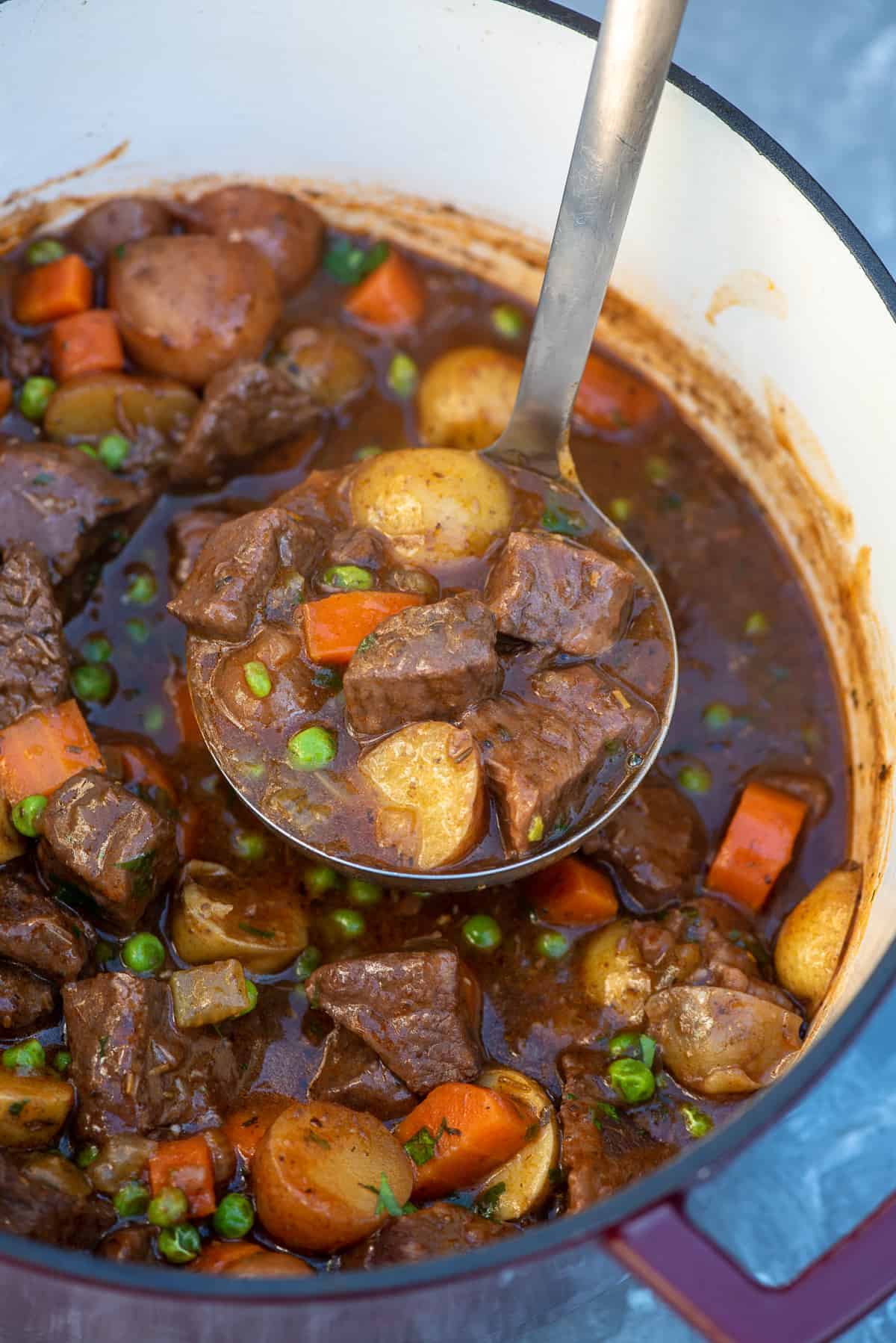
Credit: www.fromvalerieskitchen.com
Secret Ingredient
The secret ingredient can transform a classic beef stew from good to unforgettable. It adds depth and richness without overpowering the natural flavors of the meat and vegetables.
Many cooks keep this ingredient hidden, but its effect is clear in every spoonful. It blends perfectly with the slow-cooked beef and hearty broth, giving the stew an extra layer of savoriness.
Adding Anchovies For Umami Boost
Anchovies are a powerful umami enhancer. They melt into the stew as it simmers, disappearing but leaving behind a rich, savory taste.
Just a small amount, finely chopped or mashed, adds complexity. It deepens the beef flavor and balances the sweetness of carrots and onions.
This secret ingredient works like magic. It lifts the stew’s taste without making it fishy or salty.
Serving Suggestions
Serving your classic beef stew with the right sides and presentation makes the meal even better. It enhances flavors and creates a warm, inviting dining experience. Simple additions can turn your stew into a complete and satisfying meal.
Choosing Side Dishes
Pick sides that soak up the rich stew sauce well. Creamy mashed potatoes or buttery egg noodles work perfectly. Crusty bread or soft dinner rolls also help scoop up every bite.
Steamed green beans or roasted root vegetables add color and balance. A crisp garden salad offers a fresh contrast to the hearty stew. Keep sides easy and complementary to the stew’s deep flavors.
Presentation Tips
Serve the stew in deep bowls to hold the rich broth and chunky ingredients. Garnish with fresh parsley or thyme for a pop of green and a fresh aroma. Wipe bowl edges clean for a neat look.
Arrange the side dishes attractively on the plate or serving board. Use warm plates to keep the stew hot longer. Small touches like a folded napkin or rustic wooden board add charm.
Tips For Leftovers
Classic beef stew often makes plenty, leaving delicious leftovers. Storing and reheating these leftovers correctly keeps the stew tasty and safe. These tips help you enjoy the stew even days after cooking. Follow simple steps to keep flavor and texture just right.
Storage Best Practices
Cool the stew before storing it. Hot stew can raise fridge temperature. Use airtight containers to keep the stew fresh. Store in the fridge for up to 4 days. For longer storage, freeze the stew in portions. Label containers with the date for easy tracking. Avoid storing stew at room temperature over two hours.
Reheating For Best Flavor
Reheat stew gently on the stove or in the microwave. Stir often to heat evenly and prevent burning. Add a splash of broth or water if the stew looks thick. Heat until steaming hot, about 165°F (74°C). Avoid boiling as it can toughen the meat. Reheat only the portion you plan to eat. This keeps the rest fresh for later meals.
Frequently Asked Questions
What Is The Secret To A Good Beef Stew?
The secret to a good beef stew lies in using well-marbled beef, searing it for flavor, slow-simmering with aromatics, and thickening the gravy. Low, slow cooking breaks down collagen, creating tender, rich, and flavorful results. Deglazing with broth or wine enhances depth.
What Is The Secret Ingredient In Beef Stew?
The secret ingredient in beef stew is anchovies. They add a briny, buttery umami flavor, enhancing the stew's richness and depth.
What Are The Best Ingredients For A Beef Stew?
The best beef stew ingredients include chuck beef, potatoes, carrots, celery, onions, garlic, beef broth, red wine, tomato paste, bay leaves, and fresh thyme. Searing meat and slow cooking enhance flavor and tenderness. Adding Worcestershire sauce boosts depth. Flour or mashed potatoes thicken the stew naturally.
What Is The Oldest Stew Recipe?
The oldest stew recipe dates back to prehistoric times, where early humans cooked meat and vegetables in clay pots over fire.
Conclusion
This classic beef stew recipe brings warmth and comfort to your table. Tender beef, rich broth, and fresh vegetables create a hearty meal. Simple steps deliver deep flavors everyone will enjoy. Perfect for family dinners or cozy nights in. Try this recipe to savor a timeless, delicious stew.


.webp)