
How to Make Food More Flavorful?
How to Make Food More Flavorful: Simple Tips for Bold Taste
Do you ever find your meals just missing that special something? You’re not alone.
Making food more flavorful isn’t about complicated recipes or rare ingredients—it’s about simple, smart steps you can use every time you cook. Imagine turning everyday dishes into mouthwatering delights that make your taste buds sing. You’ll discover easy ways to boost flavor by seasoning throughout cooking, adding a splash of acidity, layering in rich fats, and finishing with fresh herbs or spices.

Ready to transform your cooking and impress yourself (and anyone you share your meals with)? Keep reading, and learn the secrets to making your food truly unforgettable.
Season In Layers
Seasoning in layers means adding flavor step by step during cooking. It helps build depth and richness in every bite. This approach makes your dishes taste more balanced and exciting.
Start seasoning early and keep adding small amounts as you cook. Each layer of seasoning enhances the natural flavors of your ingredients. This method prevents bland food and creates a full taste.
Salt Throughout Cooking
Salt is a key seasoning that brings out natural flavors. Add salt in stages, starting when you cook onions or vegetables. This helps draw out moisture and intensify taste.
Salt pasta water generously to season the noodles from the inside out. Also, salt rice or grains during cooking for better flavor. Finish with a pinch of salt before serving to adjust taste perfectly.
Use Aromatics Early
Aromatics like garlic, onions, and ginger add a fragrant base to your dish. Cook them early in oil or butter to release their flavors. This step creates a strong flavor foundation.
Adding herbs or spices with aromatics also helps infuse the dish deeply. The longer they cook, the more they blend into the food, making it tastier.
Balance With Pepper And Spices
Pepper and spices add warmth and complexity. Use them in small amounts at different stages of cooking. Toasting spices before adding them can boost their aroma.
Add pepper near the end to keep its sharp flavor. Mixing various spices creates layers of taste that keep each bite interesting and satisfying.

Credit: thebigswich.com
Enhance With Acids
Acids bring a bright, fresh taste to many dishes. They balance rich flavors and make food feel lighter. Using acids can change a dish from dull to vibrant in seconds. Acids also help highlight other ingredients, making every bite more enjoyable.
Add Citrus Juice
Citrus juices like lemon, lime, and orange add sharpness. A squeeze of lemon juice can brighten salads and cooked vegetables. Lime juice works well with seafood and Mexican dishes. Add citrus juice at the end of cooking to keep its fresh taste.
Splash Of Vinegar
Vinegar adds tang and depth to many recipes. Try apple cider, balsamic, or red wine vinegar. A splash of vinegar can lift dressings, marinades, and roasted vegetables. Add vinegar slowly, tasting as you go to avoid overpowering the dish.
Brighten Stews And Sauces
Acids cut through rich, heavy stews and sauces. A little lemon juice or vinegar added near the end wakes up flavors. It balances fats and spices, making the dish taste fresher. This simple trick helps stews and sauces feel less heavy.
Boost Umami
Umami is the savory taste that makes food deeply satisfying. It brings a rich, mouthwatering flavor to dishes. Boosting umami can turn simple meals into something special.
Using ingredients rich in umami adds complexity without extra salt or fat. Here are easy ways to enhance umami in your cooking.
Incorporate Soy Sauce And Miso
Soy sauce is a classic umami booster. Add a splash to soups, stir-fries, or marinades for depth. It blends well with many flavors and adds a savory punch.
Miso paste is another powerful ingredient. Stir it into sauces or soups for a rich, fermented taste. Miso also adds protein and probiotics, making your meal healthier.
Use Fish Sauce Or Nutritional Yeast
Fish sauce is a strong umami source used in many Asian dishes. Use it sparingly to enhance flavor without overpowering. It brightens dishes with a salty, savory note.
Nutritional yeast is popular in vegan cooking. It offers a cheesy, nutty flavor that lifts the taste of sauces, dressings, and snacks. Sprinkle it over popcorn or pasta for an umami kick.
Add Richness With Mushrooms Or Tomatoes
Mushrooms have natural glutamates that boost umami. Sauté them to release their flavor and add depth to stews or pasta. Dried mushrooms, especially, pack a strong umami punch.
Tomatoes also contain glutamates that enrich dishes. Use sun-dried tomatoes or tomato paste for concentrated flavor. They add sweetness and a savory background to many recipes.
Use Healthy Fats
Using healthy fats can greatly improve the taste and texture of your meals. Fats add richness and depth to food, making every bite more enjoyable. They also help carry flavors, spreading spices and herbs evenly across your dish. Choosing the right fats enhances both flavor and nutrition. Here are some simple ways to use healthy fats in your cooking.
Olive Oil And Butter
Olive oil is a staple healthy fat. It has a fruity, slightly peppery taste that lifts salads, vegetables, and meats. Use extra virgin olive oil for the best flavor and health benefits. Butter adds a creamy, rich taste that works well in baking, sauces, and sautés. Both fats bring warmth and fullness to dishes without overpowering other ingredients.
Creamy Additions Like Avocado
Avocado is a natural, creamy fat source. Its mild flavor pairs well with many foods. Adding mashed avocado to sandwiches or salads adds smoothness and moisture. It also boosts heart-healthy fats and vitamins. Avocado can replace less healthy spreads and dressings for a fresh, creamy touch.
Fat As A Flavor Carrier
Fats dissolve and carry flavors better than water. Spices and herbs release their aroma when mixed with fats. Cooking with oils or butter spreads these flavors evenly. Fat enhances the taste of garlic, onions, and other aromatics. It also helps create crispy, golden textures on cooked foods. Using fats wisely boosts overall flavor without extra salt or sugar.
Master Browning And Caramelization
Browning and caramelization create deep, rich flavors in food. These cooking processes develop natural sugars and proteins. They add complexity and sweetness to simple ingredients.
Understanding how to use heat correctly enhances taste. The result is food with a golden color and a savory aroma. This section shows ways to use browning and caramelization for tastier meals.
Roast Vegetables For Sweetness
Roasting vegetables brings out their natural sugars. Heat causes caramelization, turning edges golden brown. This process makes vegetables sweeter and more flavorful.
Cut vegetables evenly to cook them uniformly. Use a hot oven around 400°F (200°C) for best results. Toss veggies with oil to help brown and crisp them.
Caramelize Onions
Caramelizing onions takes time but adds a sweet, rich taste. Cook onions slowly over low heat until soft and golden. This process breaks down sugars and creates a deep flavor.
Stir onions often to prevent burning. Use a wide pan for even cooking. Add a pinch of salt to draw out moisture and speed caramelization.
Sear Meats Properly
Searing meat locks in juices and creates a flavorful crust. Use a hot pan and dry meat well before cooking. Avoid moving meat too soon to allow a crust to form.
Sear each side until brown, then finish cooking as needed. This method adds texture and depth to meats. Proper searing improves both flavor and appearance.
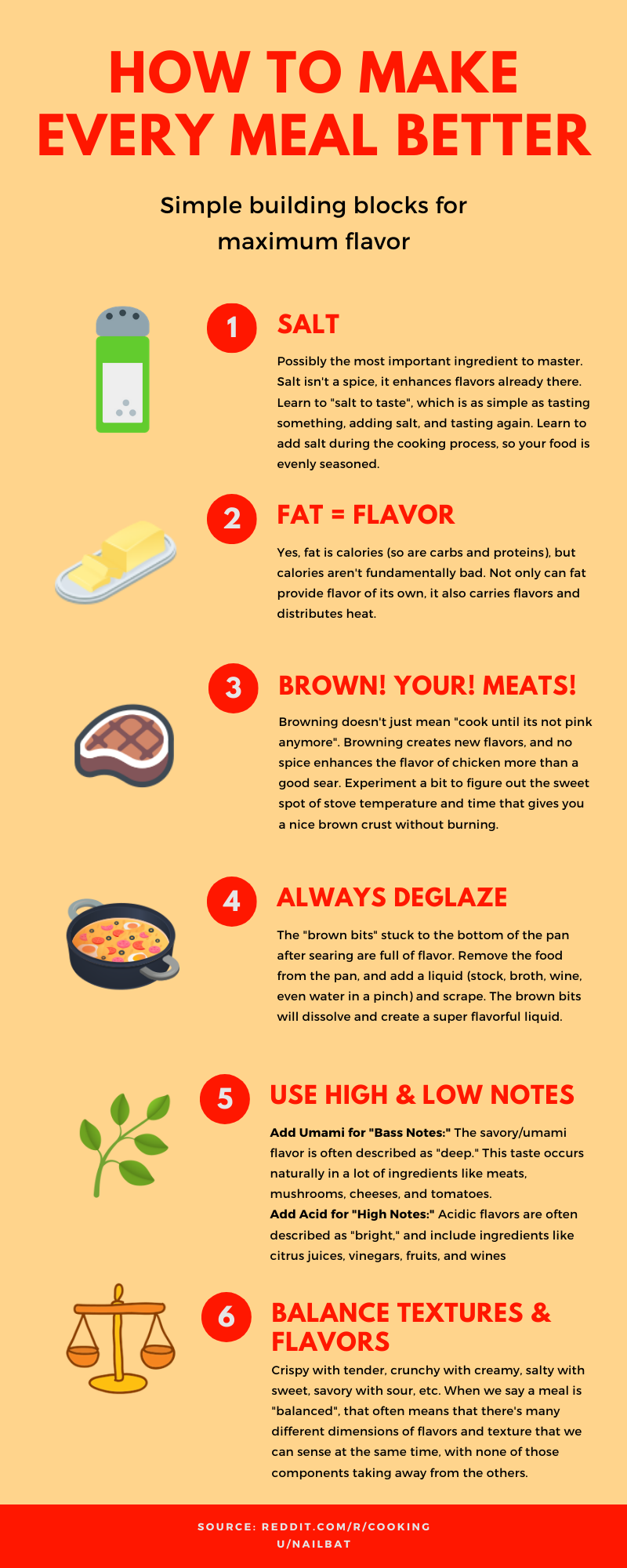
Credit: www.tinyspoonchef.com
Let Meat Rest
Letting meat rest after cooking is a simple step that improves its taste and texture. This short pause allows the meat to finish cooking gently and helps juices settle. Resting makes meat juicier and more tender. Many cooks skip this step, but it makes a big difference in flavor.
Retain Juices
Meat holds juices inside its fibers while cooking. Cutting it immediately causes these juices to spill out. Resting lets the juices move back inside the meat. This keeps the meat moist and flavorful. The result is a juicy bite every time.
Improve Texture And Flavor
Resting helps meat fibers relax after heat shrinks them. This makes the meat softer and easier to chew. The flavors also have time to spread evenly inside the meat. This creates a richer and more balanced taste. The meat feels tender and tastes better.
Add Fresh Herbs And Spices
Fresh herbs and spices are simple ways to boost your food's flavor. They add color, aroma, and a burst of taste. Using them correctly can turn ordinary dishes into something special. Understanding when and how to use herbs and spices helps you get the best flavor from each ingredient.
Use Fresh Herbs At End
Fresh herbs lose their flavor if cooked too long. Add them at the end of cooking to keep their bright taste. Sprinkle chopped parsley, cilantro, or basil just before serving. This keeps the herbs fresh and vibrant. It also adds a nice pop of color to your dish.
Bloom Dried Spices Early
Dry spices need heat to release their flavor. Cook them briefly in oil or butter at the start. This process is called blooming. It makes spices like cumin, paprika, and coriander taste stronger. Blooming spices also fills the kitchen with a rich, warm scent.
Create Your Own Spice Blends
Mixing your own spice blends is fun and easy. Combine spices like chili powder, garlic powder, and oregano for a custom mix. Use these blends to season meats, vegetables, or soups. Creating your own blend lets you control the flavor and heat level. Store blends in airtight jars to keep them fresh longer.
Introduce Texture Contrast
Introducing texture contrast can make your dishes more exciting and enjoyable. Texture adds an extra layer of interest beyond just flavor. A good mix of soft, crunchy, and crispy elements keeps every bite engaging. It helps highlight different flavors and makes the eating experience more satisfying.
Add Crunch With Nuts
Nuts bring a natural crunch and a rich flavor to any dish. Toasted almonds, walnuts, or pecans work well in salads and desserts. Sprinkle them on top to add a nutty taste and a satisfying crunch. Nuts also provide healthy fats and protein, making your meal more nutritious.
Use Crispy Toppings
Crispy toppings create a delightful contrast with softer foods. Fried onions, crispy bacon bits, or toasted seeds add a burst of texture. Scatter these toppings over soups, casseroles, or roasted vegetables. They enhance flavor and give your dish a pleasing crunch.
Incorporate Breadcrumbs
Breadcrumbs add a golden, crunchy layer to baked dishes. Use them to coat chicken or fish before baking or frying. Mix breadcrumbs with herbs and spices for extra flavor. They can also be sprinkled on casseroles or pasta for a crunchy finish.
Season Pasta And Grains
Seasoning pasta and grains is a simple way to boost their flavor. These staples can taste bland without proper seasoning. Small steps during cooking make a big difference. Salt and fat enhance taste and texture. This section shows how to season pasta and grains well.
Salt Pasta Water Generously
Salt the water like the sea. This is the first chance to add flavor. Pasta absorbs the water as it cooks. If the water is salty, the pasta tastes better. Use about one to two tablespoons of salt per four quarts of water. Do not be shy with salt here.
Season Rice Cooking Water
Rice needs seasoning too. Add salt to the cooking water before boiling. This helps the rice absorb flavor. Use about half a teaspoon of salt per cup of rice. Stir the salt well so it dissolves. This step prevents bland rice and improves the final dish.
Add Butter Or Oil
Add fat for richness and smooth texture. Stir in a small amount of butter or oil after cooking. This coats the pasta or grains and adds flavor. Use one to two teaspoons per serving. Butter adds creaminess; oil adds a light, fresh taste. Both help carry other flavors in the dish.
Fix Bland Dishes Quickly
Bland dishes can happen to anyone. The good news? You can fix them fast. Small tweaks make a big taste difference. Use simple ingredients already in your kitchen to boost flavor quickly.
Adjust Salt And Acid
Salt brings out natural flavors in food. Taste your dish first, then add salt little by little. Avoid adding too much at once.
Acid brightens and balances flavors. Try a splash of lemon juice, lime, or vinegar. A little acid can lift dull dishes instantly.
Add Fresh Herbs
Fresh herbs add color and aroma. Chop parsley, cilantro, or basil and sprinkle on top. Herbs give freshness and help mask blandness.
Add herbs at the end of cooking. This keeps their flavor strong and vibrant.
Use Bold Flavor Boosters
Bold ingredients like soy sauce, mustard, or hot sauce add depth. Use small amounts to avoid overpowering your dish.
Umami-rich items such as mushrooms or Parmesan cheese also enhance taste. They create a savory, satisfying flavor.
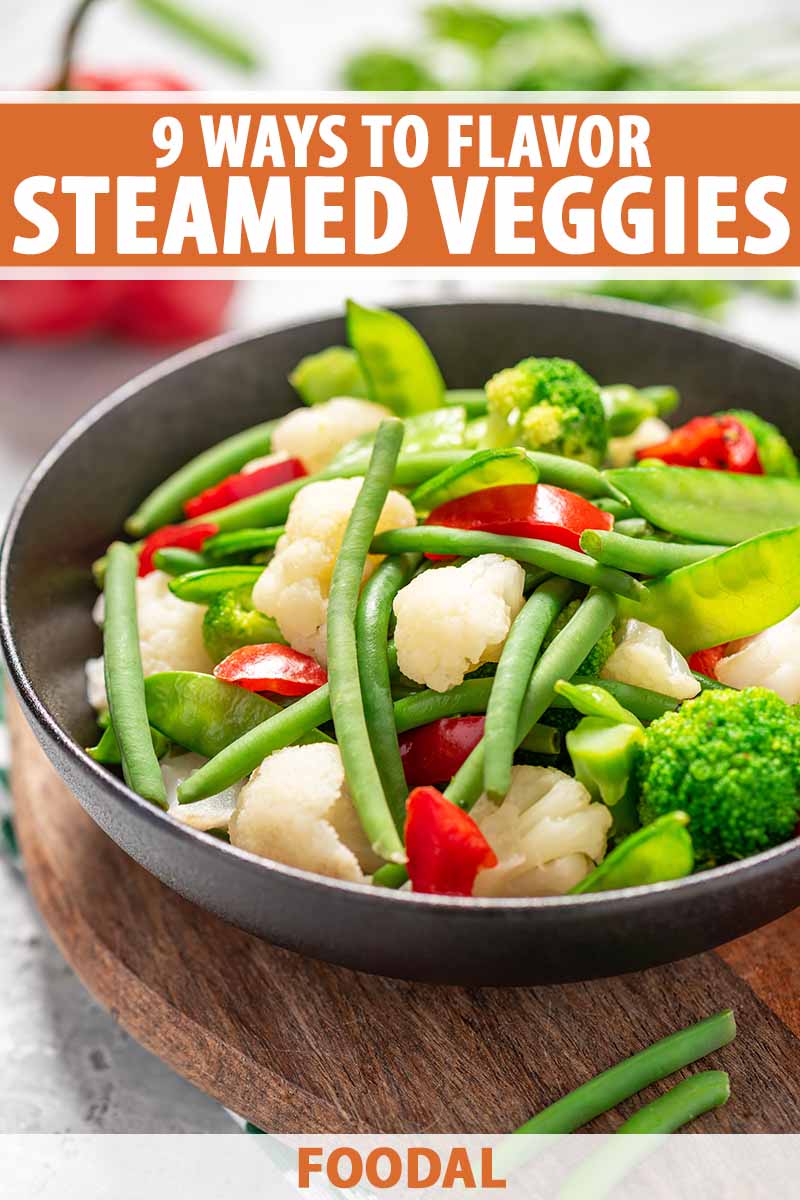
Credit: foodal.com
Frequently Asked Questions
What Is The 2 2 2 Rule For Food?
The 2 2 2 rule for food means refrigerate cooked food within 2 hours, eat leftovers within 2 days, and freeze if not eaten by then.
How To Increase Taste In Food?
Increase food taste by seasoning in layers, adding salt throughout cooking. Use acids like lemon or vinegar for brightness. Incorporate fats for richness and fresh herbs for aroma. Apply proper cooking techniques like browning and resting meat to enhance flavors naturally.
How To Fix Food That Tastes Bland?
Fix bland food by adding salt, acid (lemon or vinegar), fresh herbs, and spices. Season throughout cooking. Use fats for richness. Brown or caramelize ingredients to enhance flavor.
What Can I Put On Food To Make It Taste Better?
Enhance food flavor by adding salt, fresh herbs, lemon or lime juice, vinegar, butter, or umami-rich ingredients like soy sauce. Season throughout cooking and use fats to boost richness.
Conclusion
Making food more flavorful takes simple steps anyone can follow. Season your dishes little by little as you cook. Add a splash of lemon juice or vinegar to brighten flavors. Use fresh herbs and spices to add aroma and texture.
Don’t forget to balance salt and richness with fats or umami ingredients. Cook food well, like browning meat or letting it rest, to deepen taste. These easy tips help your meals taste better every time. Enjoy cooking and tasting food that feels fresh and full of life!


