
How to Read Nutrition Labels
How to Read Nutrition Labels: Master Healthy Eating Today

You probably glance at nutrition labels without really knowing what they mean. But what if you could unlock the secrets they hold to make smarter food choices every day?
Understanding how to read nutrition labels puts the power in your hands to control your health, energy, and weight. It’s easier than you think, and once you know what to look for, you’ll spot hidden sugars, unhealthy fats, and misleading serving sizes right away.
Keep reading, and you’ll learn simple steps to decode these labels quickly so your next grocery trip can fuel your body the way it deserves.
Serving Size And Servings Per Container
Understanding the serving size and the number of servings per container is the first step in reading a nutrition label. These details help you know how much you are eating and the nutrients you get from that amount.
Serving size tells you the amount of food that the nutrition facts are based on. Servings per container show how many servings are in the whole package. Knowing this can prevent confusion and help control portion sizes.
What Is Serving Size?
Serving size is the specific amount of food or drink. It is measured in familiar units like cups, pieces, or grams. This size reflects how much people usually eat at one time. The nutrition facts on the label show values for this amount only.
If you eat more or less, you must adjust the numbers accordingly. Serving size helps compare different products easily.
Why Servings Per Container Matter
Servings per container tell you how many servings are inside the whole package. Some packages have more than one serving. Eating the entire package means you consume all the nutrients shown times the number of servings. This can add up quickly for calories, sugar, or fat. Checking this number helps avoid eating more than planned.
How To Use Serving Size And Servings Per Container
Look at the serving size first to understand the base amount. Next, check the servings per container to see how many servings are inside. Multiply the nutrition values by the number of servings you eat. This gives a clear picture of your total intake. Watching these numbers helps manage diet and portion control better.
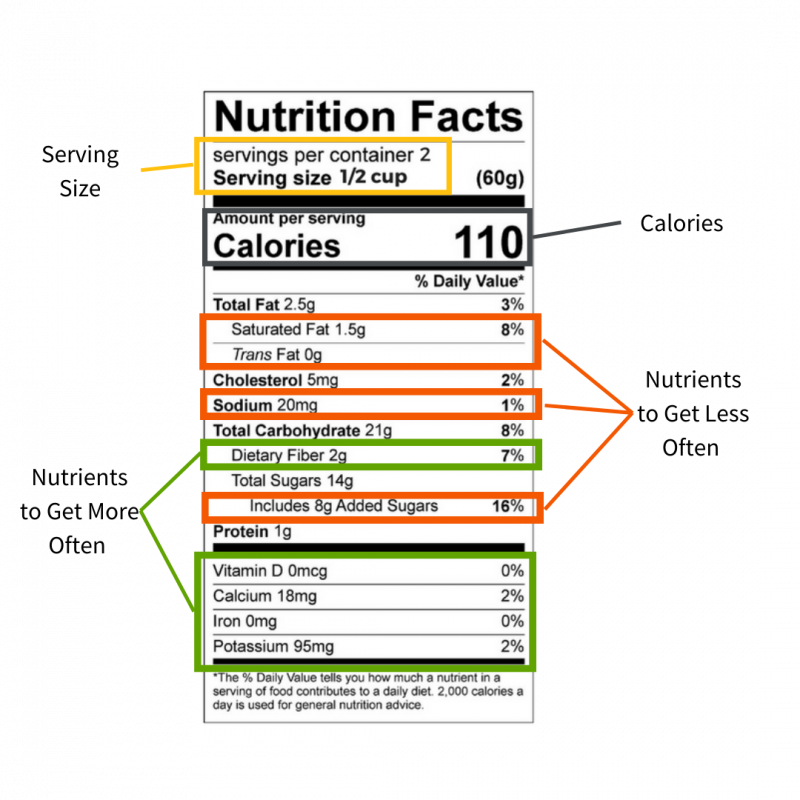
Credit: eat-move-save.extension.illinois.edu
Calories And Calorie Sources
Calories show the energy you get from food. Your body uses this energy to work and grow. Reading calorie information helps control energy intake for healthy living.
Calories come from different sources on the label. These sources include carbohydrates, proteins, fats, and sometimes alcohol. Each source provides a different number of calories per gram.
Understanding Total Calories
Total calories on a label tell you how much energy one serving gives. This number combines calories from carbs, protein, fat, and alcohol.
Knowing total calories helps manage weight and energy balance. You can compare foods and choose ones that fit your needs.
Calories From Carbohydrates And Protein
Carbohydrates and protein each provide 4 calories per gram. They are essential for energy and body repair.
Carbs are the body's main energy source. Protein builds muscles and supports immune health.
Calories From Fats
Fats provide 9 calories per gram, more than carbs and protein. They help absorb vitamins and protect organs.
Watch fat calories to avoid eating too much. Focus on healthy fats like those from nuts and fish.
Calories From Alcohol
Alcohol supplies 7 calories per gram. These calories add up but offer no nutrients.
Limit alcohol calories to reduce extra energy intake and support health.
Macronutrients Breakdown
Understanding macronutrients on a nutrition label helps you make better food choices. Macronutrients include fats, carbohydrates, and proteins. Each plays a unique role in your body and affects your health differently.
Reading the macronutrient section clearly tells you how much energy you get from each type. It also shows the quality of these nutrients. This knowledge guides you toward balanced meals that fit your lifestyle.
Total Fat And Types
Total fat shows the amount of fat per serving. Fat gives energy and helps absorb vitamins.
Look for types of fat listed below total fat. Saturated fat and trans fat can raise cholesterol and harm your heart. Keep these low.
Unsaturated fats, like polyunsaturated and monounsaturated fats, are healthier choices. These support heart health and brain function.
Carbohydrates And Fiber
Carbohydrates are the body's main energy source. The label shows total carbs per serving.
Sugars are also listed under carbohydrates. Natural sugars come from fruits and milk. Added sugars should be limited.
Dietary fiber is part of carbs but does not raise blood sugar. Fiber helps digestion and keeps you full longer. Aim for higher fiber foods.
Protein Content
Protein builds and repairs tissues in your body. It supports muscles, skin, and immune health.
The label lists protein per serving. Good protein sources include meat, dairy, beans, and nuts.
Checking protein helps ensure you meet daily needs. Balanced protein intake aids in overall wellness and energy.

Credit: www.jointangelo.com
Micronutrients To Watch
Micronutrients play a key role in your health. These tiny nutrients include vitamins, minerals, sodium, and added sugars. They help your body function well and stay strong. Reading nutrition labels helps you find out how much of these nutrients are in your food. This knowledge guides you to make better choices for your diet.
Vitamins And Minerals
Vitamins and minerals support your immune system and energy levels. Common vitamins listed on labels are vitamin A, C, D, and B12. Minerals often include calcium, iron, and potassium. Check the % Daily Value (%DV) to see if a food is a good source. A %DV of 20% or more means the food has a high amount of that nutrient. Aim to get enough vitamins and minerals every day to stay healthy.
Sodium And Added Sugars
Sodium and added sugars need careful attention. Too much sodium can raise blood pressure and cause heart issues. The label shows sodium in milligrams and %DV. Try to keep sodium intake below 2,300 mg per day. Added sugars are sugars added during processing. They add calories but few nutrients. High added sugar intake can cause weight gain and health problems. Look for foods with less than 10% of calories from added sugars.
Percent Daily Value (%dv)
The Percent Daily Value (%DV) on nutrition labels shows how much a nutrient in one serving contributes to your daily diet. It helps you understand if a food has a lot or a little of a nutrient. The %DV is based on a daily diet of 2,000 calories, which is a general guideline for most adults. This number lets you compare different foods easily and make healthier choices.
High And Low Nutrient Indicators
The %DV helps identify foods high or low in certain nutrients. A %DV of 20% or more means the food is high in that nutrient. A %DV of 5% or less means it is low. Use this to find foods rich in vitamins and minerals or low in fats, sugars, and sodium. This simple guide helps you pick better options quickly.
Using %dv To Compare Foods
You can use %DV to compare similar foods. Check the %DV for nutrients like saturated fat, sodium, or fiber. Choose foods with lower %DV in unhealthy nutrients and higher %DV in healthy ones. This method makes shopping smarter and helps keep your diet balanced. Comparing labels saves time and supports your health goals.
Ingredient List Insights
Reading nutrition labels helps identify key ingredients and nutrients in foods. Focus on serving size, calories, and nutrient amounts to make healthier choices. Ingredients are listed by weight, so the first items appear in the largest amounts.
Understanding The Order Of Ingredients
The ingredient list shows all items in a product. These items are listed by amount. The first ingredient is the one used the most. The last ingredient is used the least. Knowing this helps you see what is really in your food. For example, sugar as the first ingredient means the product has a lot of sugar.
Spotting Hidden Sugars And Additives
Sugars can appear under many names. Look for words like sucrose, high fructose corn syrup, or maltose. These all mean sugar. Additives like preservatives and artificial colors also appear here. Some additives can cause allergies or sensitivities. Checking the list helps avoid unwanted ingredients.
Identifying Whole Foods Vs. Processed Ingredients
Whole foods have simple names, like "oats" or "tomatoes." Processed foods often have long, complex names with many syllables. These may include chemical-sounding terms. Choosing foods with mostly whole ingredients is healthier. It means less processing and more natural nutrients.
Recognizing Allergens And Dietary Restrictions
Common allergens like nuts, soy, or dairy appear in the ingredient list. They are sometimes highlighted in bold or underlined. People with allergies should read this list carefully. It also helps those following diets, like gluten-free or vegan, to check for banned ingredients.
Common Label Claims Explained
Nutrition labels often include claims that catch the eye quickly. These claims can guide choices but might also confuse. Understanding common label claims helps make smarter food decisions. This section breaks down popular claims and what they really mean.
Low Fat And Reduced Sugar
“Low fat” means the product contains 3 grams or less of fat per serving. It does not mean zero fat. Some fat is still present, so check the exact amount on the label.
“Reduced sugar” means the product has at least 25% less sugar than the regular version. It does not mean the product is sugar-free. Always check the grams of sugar per serving to be sure.
Organic And Natural Labels
“Organic” means the food is grown without synthetic pesticides or fertilizers. It follows strict rules from government agencies. Organic products often cost more but are free from many chemicals.
“Natural” means the food does not contain artificial ingredients or preservatives. This label is less regulated and can vary between brands. It does not guarantee the food is healthy or organic.
Tips For Healthier Choices
Choosing healthier foods starts with understanding nutrition labels. These labels hold key information to guide better eating decisions. Knowing what to check helps avoid excess calories, sugars, and unhealthy fats. It also supports weight control and overall wellness.
Below are practical tips to read labels effectively and pick smarter options at the store.
Reading Labels For Weight Management
Focus on serving size first. This tells how much you eat to get the listed calories and nutrients.
Check total calories per serving to keep your intake in balance. Choose foods with fewer calories if you want to lose weight.
Look at protein and fiber amounts. These keep you full longer and reduce overeating.
Limit foods high in saturated fat and sodium. These add calories and may harm heart health.
Identifying Hidden Sugars And Fats
Read the ingredients list carefully. Ingredients are listed by weight, from most to least.
Watch for sugar under many names like sucrose, corn syrup, or maltose.
Note fats labeled as hydrogenated or partially hydrogenated. These contain unhealthy trans fats.
Choose products with little or no added sugars and healthy fats like olive or canola oil.
Special Considerations
Special considerations are important when reading nutrition labels. Different needs require extra attention to details. Allergies, intolerances, and food types affect how you read labels. Understanding these points helps you make safer, healthier choices.
Labels For Allergies And Intolerances
Nutrition labels often list common allergens clearly. Look for ingredients like nuts, dairy, gluten, and soy. Some labels highlight allergens in bold or separate sections. Cross-contamination warnings are also important to note. People with allergies should avoid products with these warnings. For intolerances, check for lactose or gluten-free claims. These labels help prevent reactions and discomfort.
Nutrition Labels On Packaged Vs. Fresh Foods
Packaged foods must have nutrition labels by law. These labels show calories, fat, sugar, and other nutrients. Fresh foods, like fruits and vegetables, usually lack labels. You can find nutrition info for fresh foods online or on store signs. Fresh foods often have fewer added ingredients and preservatives. Comparing packaged and fresh foods helps choose healthier options. Remember, fresh foods generally have simpler nutrition profiles.

Credit: newsroom.nebraskablue.com
Frequently Asked Questions
How Do You Correctly Read A Nutrition Label?
Start by checking the serving size to understand nutrient amounts. Review calories, fats, carbs, protein, and % Daily Value. Choose foods with lower saturated fat, sodium, and added sugars. Use % Daily Value to gauge nutrient impact on your daily diet.
What Is The 4 4 9 Rule?
The 4-4-9 rule estimates calories from macronutrients: 4 calories per gram of carbs and protein, 9 per gram of fat.
What Does 80% Dv Mean?
80% DV means a serving provides 80% of the daily recommended amount of a nutrient. It helps gauge nutrient intake.
Is 100 Calories Of Chocolate The Same As 100 Calories Of Fruit?
100 calories of chocolate and fruit provide the same energy but differ in nutrients. Fruit offers fiber, vitamins, and antioxidants. Chocolate often contains added sugars and fats. Fruit promotes fullness and steadier blood sugar, while chocolate can cause rapid spikes.
Nutritional quality matters beyond calorie count.
Conclusion
Reading nutrition labels helps you make smarter food choices daily. Focus on serving size, calories, and key nutrients like fats, sugars, and fiber. Percent Daily Value guides you on nutrient amounts in your diet. Understanding labels can improve your health and energy levels.
Keep practicing; it becomes easier over time. Healthy eating starts with knowing what’s in your food. Simple steps lead to better habits and well-being.


.webp)